

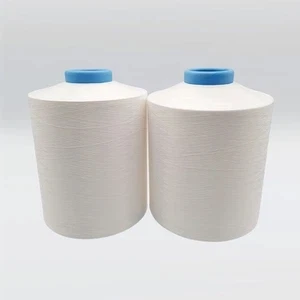
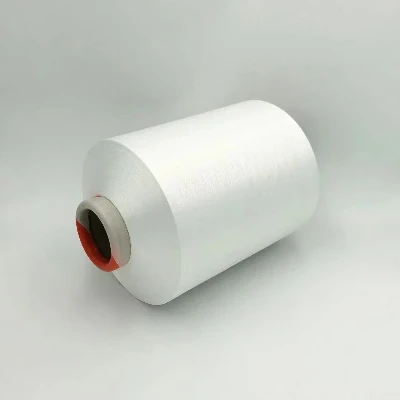
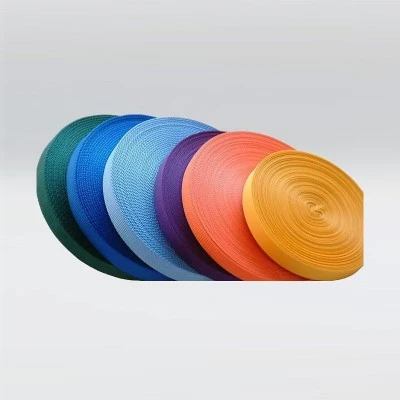
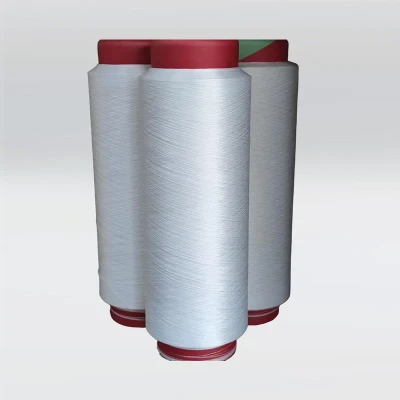
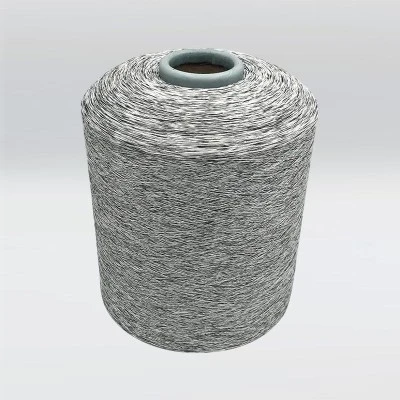
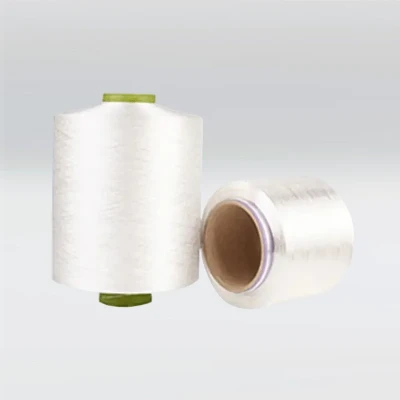
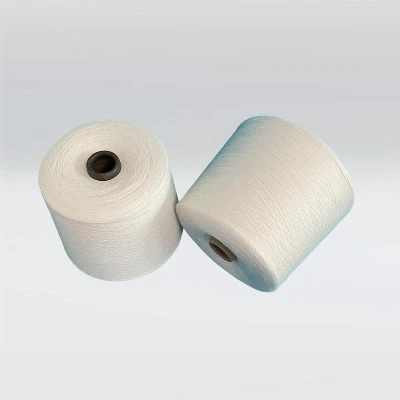
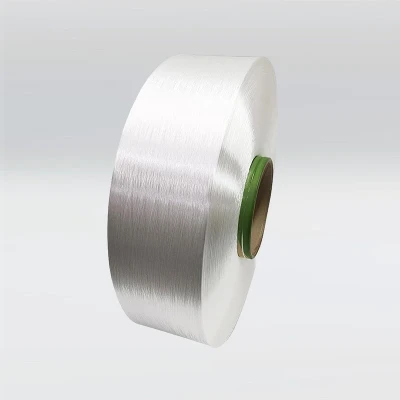
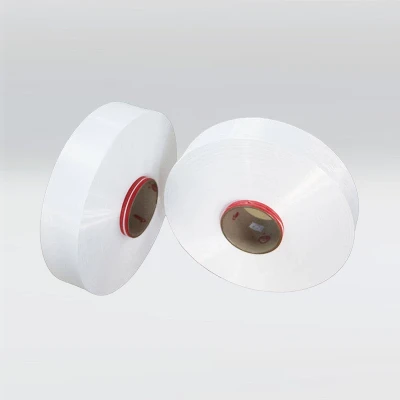
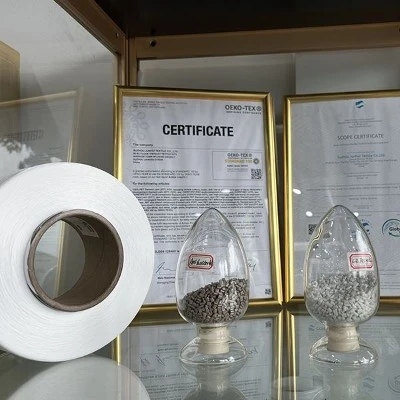
Environmentally Friendly Yarn
Why Choose Us?
Quality products
The company has Germany barmag high-speed loading machine, TMT Japan imported winding machine, specializing in the production of various specifications of porous fine denier and differentiated microfiber products.
Wide range of products
Microdenier fiber; High elastic series: High elastic ultra-high elastic, PTT, PBT can be with function or color; Imitation cotton series; Regeneration series; Cationic luminous series; Functional yarn; PLA fiber; Polyester color silk, etc., can accept a variety of differentiated fiber customization.
Reliable service
We with the best cooperation team, in line with the common development with customers, create value faith, constantly improve the quality of their products, gain customers trust and love.
Professional team
We have professional R&D team, with many internationally renowned enterprises discuss for research, development and application in environmental protection and functional yarn and fabric.


Advantages of Environmentally Friendly Yarn
The demand for environmentally friendly yarn is gaining momentum, mainly due to its advantages. These advantages include:
Lower carbon footprint
One of the key advantages of environmentally friendly yarn is its low carbon footprint. Recycling PET bottles to produce polyester yarn results in fewer greenhouse gases. This helps combat climate change and minimise the environmental footprint associated with polyester manufacturing.
Colour fastness
Environmentally friendly yarn exhibits strong resistance to fading, bleeding or transferring the colour to other materials. It retains its original colour and aesthetic appearance despite prolonged exposure to all environmental conditions.
Tensile strength
It is one of the most important benefits of environmentally friendly yarn. The yarn retains good strength and tensile properties, which are important for durability. It has sufficient strength to withstand tension and stress without breaking.
Versatility
Environmentally friendly yarn is known for its versatility. It can be used in a wide range of applications, including floor covering, industrial yarns, and textile manufacturing.
Resistance to mechanical abrasion and chemicals
Environmentally friendly yarn is known to have strong resistance to mechanical abrasion and chemicals. This is crucial to prevent wear and tear, contributing to the longevity of the yarn.
Compatibility with manufacturing processes
Environmentally friendly yarn is compatible with various textile manufacturing processes, including spinning, weaving, knitting, and dyeing. It can be processed using conventional machinery and techniques without requiring significant modifications or adjustments.
Desirable Properties of Environmentally Friendly Yarns
Fineness
Diameter measurement of environmentally friendly yarns and yarns is not possible because of compressible nature and non-uniformity in diameter throughout its length therefore in textile fineness is expressed in terms of linear density.
If the fibre is finer there will be more number of fibres in the yarn cross section which will make more surface area available for inter-fibre friction and thus will provide more resistance to slippage. Due to this fact the yarns having the samecount, yarn spun from coarse and fine fibres, the yarn spun from finer fibres will have higher strength.
The fineness of cotton fibre is expressed in micrograms per inch i.e. micronaire.
Resilience
The resistance to compression, flexing or torsion varies from fibre to fibre. Some fibres have a natural tendency to return to their original condition when any of the above-mentioned forces is applied, an important property where, for instance, recovery from creasing is required.
Wool is outstanding in this respect by virtue of its natural characteristics, but cellulosic fibres may be modified in such a manner so as to greatly improve these properties. This springiness of a fibre or its mass resilience is highly desirable for carpet wool. Because of resiliency fibre/yarn/fabrics hold their shape, drape gracefully and do not wrinkle.
Capillarity and porosity
Porosity facilitates the absorption of moisture, liquid lubricants, dyes, oils and steam by the fibres so as to thoroughly permeate the fibre.
Porosity in fibre is important in wet processing. The natural and manmade fibres differ greatly in respect of porosity which in turn affects other properties of fibres and consequently the processing of fibres during textile manufacture. In general, natural fibres have higher porosity than synthetic fibres.
Lustre
Natural lustre enhances the value of environmentally friendly yarn, especially natural fibres. For example, the natural lustre of the silk gave it for a long time distinct advantage over the other environmentally friendly yarns, and experiments were constantly made to improve the lustre of those fibres which were naturally dull.
Since the introduction of viscose, however, with its extremely high and almost metallic lustre, consumer taste has gone a little in the opposite direction, and many fabrics produced today are purposely delustred in order to give the desired matt finish. Therefore, it is evident that lustre, under certain conditions and for certain purposes, may enhance the value of a fibre. On the other hand, too much of brightness may be a source of aversion to the user and hence it has to be delustred to a required degree of lustre by the delustring process.
Durability
A environmentally friendly yarn should withstand processing treatments and should not be easily susceptible tophysical, chemical and bacteriological attack, which may result in damage and decomposition.
The durability of clothing to average wear and tear depends somewhat more on the elasticity, flexibility and resistance of the fibre and fabric, rather than the absolute strength of either fibre or fabric.
Strength combined with these properties provides excellent durability which is why nylon and polyester fibre fabrics seem to last forever. A raised fabric surface increases fabric resilience and provides longer resistance to abrasive surfaces, e.g. carpets, ribbed fabrics, etc.
Classification of Environmentally Friendly Yarns Based on Spinning Technology
The classification of environmentally friendly yarns can also be based on the spinning techniques employed during their production. These techniques result in yarns with distinct characteristics, enabling textile artists to achieve desired fabric outcomes.

Ring spun environmentally friendly yarn
Ring spinning is a traditional and widely used spinning technique. It involves twisting the fibres together using a ring-spinning machine. This process creates strong and versatile yarns suitable for a wide range of applications. Ring-spun yarns are known for their smoothness, durability, and ability to showcase stitch definition. They are commonly used in garments, home textiles, and industrial fabrics.

Rotor spun environmentally friendly yarn
Rotor spinning, also known as open-end spinning, is a high-speed spinning technique. It uses a rotor to spin the fibres into yarn. Rotor-spun yarns have a more textured and bulkier appearance compared to ring spun yarns. They are often used in the production of knitwear, denim fabrics, and other casual garments. Rotor spun yarns offer good productivity and cost-effectiveness.

Wrap spun environmentally friendly yarn
Wrap spinning is a specialized technique that involves wrapping staple fibres around a core filament or fibre. This process creates yarns with improved strength, smoothness, and enhanced texture. Wrap-spun yarns are commonly used in high-quality fabrics, including luxury clothing and home textiles. They provide excellent draping and a luxurious feel.

Twistless environmentally friendly yarn
Twistless yarn is produced without adding any twist during the spinning process. This unique technique creates yarns with a soft and lofty texture. Twistless yarns are often used for creating lightweight and comfortable fabrics, such as baby blankets, soft scarves, and cozy sweaters.

Air jet spun environmentally friendly yarn
Air jet spinning is a modern technique that uses high-pressure air jets to insert twist into the fibres. This method produces yarns with good strength and uniformity. Airjet spun yarns are commonly used in both apparel and home textile applications. They offer excellent efficiency and cost-effectiveness in large-scale production.

Composite and friction spun environmentally friendly yarn
Composite spinning combines two or more types of fibres, such as natural and synthetic fibres, to create yarns with unique properties. Friction spinning involves rubbing fibres against each other to create yarns without the use of traditional spinning machinery. These spinning techniques allow for the production of yarns with enhanced characteristics, such as improved strength, texture, or color variation.
Environmentally Friendly Yarn Manufacturing Process
Environmentally friendly yarn can be produced in two different ways: Mechanical process and chemical process. However, the mechanical process is much more eco-friendly than the chemical process.
Step 1: Collecting and cleaning
Pet bottles or containers are gathered at recycling facilities, packaged, and delivered to certain pet recycling facilities. The containers or bottles' caps, as well as labels, are taken off and cleansed. They are also washed and steam-clean to get rid of any non-pet materials.
Step 2: Shredding
The second step is associated with shredding. An automated bale breaker is used to shred the bottles and containers into flakes. The flakes are properly cleaned and inspected one more time to ensure there are no contaminants. Later, the colored plastics are separated from the transparent plastics.
Step 3: Processing
To be reconstructed into pet chips, it undergoes a depolymerization and depolymerization procedure. These pet chips may be a further procedure to create fresh water bottles, clothes, insulation, and so on.
Step 4: Melting
They are forced through heated pipes to turn the dry chips into a liquid. A dye plate featuring tiny pores filters the liquid across. It then solidified into fibers when it cooled, and the yarn is made by smoothing, stretching, and putting the fibers on reels.
Step 5: Polyester recycled yarn
The yarn is prepared to be used once more and knit or even woven into fabric. It performs functionally and aesthetically like traditional polyester yarn.
Environmentally friendly yarns must be stored in unopened and undamaged original packaging in an adequate warehouse under "normal" climatic conditions. Extreme temperature and humidity levels or variations must be avoided. Normal climate conditions imply that, for any 30 days period, the following conditions are met:
The average temperature is between 10 and 35 °c the average of minimum daily temperature is > 5 °c the average of maximum daily temperature is < 45 °c the average relative humidity is between 25 and 80%the average of minimum daily humidity is > 10%the average of maximum daily humidity is < 90%.
Environmentally friendly yarn's shelf life is significantly long if the fibre is stored under normal climate conditions. Environmentally friendly yarns must be protected from UV light and protected from noxious gases (nitrogen oxide maximum concentration < 0.25 ppm). We do not recommend the use of material-handling equipment with internal combustion engines in the warehouses where environmentally friendly yarns are stored.
If the fibre is stored in unopened and undamaged original packaging and under climate conditions mentioned above, defined the environmentally friendly yarn's shelf life in 2 years from production data. Environmentally friendly yarn's shelf life can be extended by revalidating of yarn properties in our laboratory.
The yarn should be handled using the fifo (first-in first-out) method. The package (pallet) must be opened at least 24 hours before being used, preferably, in the area where the product is going to be processed and in an environment with a relative humidity of 60-80% to permit conditioning.
Dipped cord and fabrics have limited storage shelf life. They are sensitive to moisture, ozone, heat and light and should always be stored in sealed black polyethylene film. We strongly recommend to verify the adhesion properties of the dipped cords and fabrics of older items before processing them.
Is Environmentally Friendly Yarn Safe to Wear
In terms of safety, there is no difference between recycled and virgin polyester. Both materials are safe to wear and use. If you have Asthma, using polyester pillowcases and sheets is preferable to cotton. You should avoid wearing polyester around open flames, but the material isn't highly flammable.
Comparable materials are not safer than polyester. The main differences are in specific attributes of the fabric, like its stretchiness and how easily it can be recycled. That last consideration is where polyester is particularly interesting, since other materials are less easy to, or not even possible to recycle.
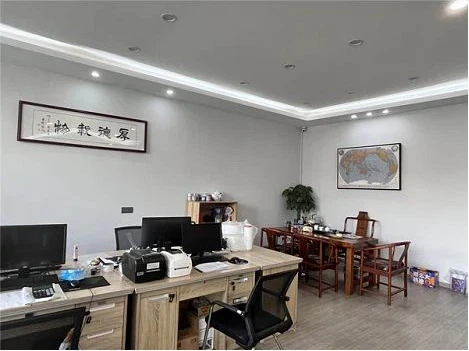
Our Factory
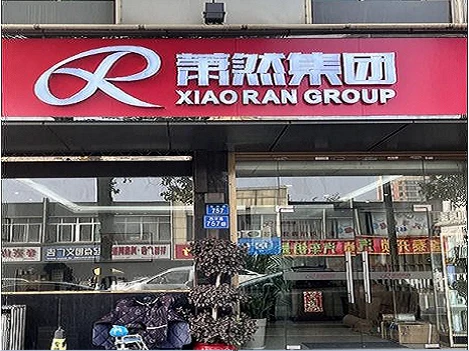
Suzhou Junhui Textile Co., Ltd
The company is founded on JUN. 2015, it is committed to develop and sell differential yarn: Microfine yarn, Recycle yarn, Flame retardant yarn, Cationic dyeing yarn and Knitting fabric products. We have professional R&D team, with many internationally renowned enterprises discuss for research, development and application in environmental protection and functional yarn and fabric. The products are over 90% for export, we have broad customer base, and establish a cooperative relationship with the customer located in 36 countries. As a responsibility, the brand service oriented textile enterprise, we has always been convinced that the only customer success is our foothold. Therefore, we with the best cooperation team, in line with the common development with customers, create value faith, constantly improve the quality of their products, gain customers trust and love.

FAQ
We're well-known as one of the leading environmentally friendly yarn manufacturers in China. If you're going to wholesale cheap environmentally friendly yarn, welcome to get free sample from our factory. Also, customized service is available.
Sorona PTT and PET FDY for Four Side Projectile, Functional Hollow warm DTY Polyester yarn, Special Polyester Chips